Compartment Fire Behaviour Training Simulation Facility
Single module Multi module Customized solutions
Compartment Fire Behaviour Training Simulation Facility
Single module Multi module Customized solutions
The Live-Fire Smoke and Heat (CFBT) Simulation Training Facility is a professional-grade training solution designed to deliver realistic, controllable, and safe fireground environments for firefighter and emergency response training.
The Live-Fire Smoke and Heat (CFBT) Simulation Training Facility is a professional-grade training solution designed to deliver realistic, controllable, and safe fireground environments for firefighter and emergency response training.
CFBT History and Design Concept
CFBT History and Design Concept
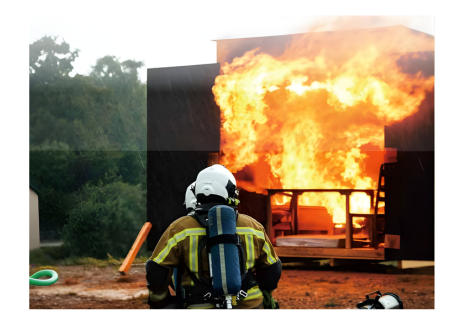
Container-based live-fire training facilities originated in Europe in the 1990s with the development of Compartment Fire Behavior Training (CFBT). The standardized container design enables fast installation, modular expansion, and cost-effective deployment, making it a globally adopted solution for modern firefighter training centers.
This training facility is designed to realistically reproduce fire behavior in enclosed spaces. It supports key fire scenarios such as flashover, behind-the-door fires, gas cylinder fires, and electrical fires. Flame heights can reach up to 2 meters, with large burn-over areas and high-volume smoke output, creating immersive and operationally realistic training conditions.
An intelligent industrial control system with IoT functionality enables one-click ignition and shutdown, real-time temperature monitoring, early warning, and rapid cooling, ensuring automation, safety, and operational reliability. As the core platform for CFBT, the facility is designed according to fire science principles, balancing realism with full instructor control and trainee safety.
The system uses clean fuels such as LPG and natural gas and complies with international safety standards including DIN 14097 and BGV C1. Integrated sound and visual effects further enhance realism and situational awareness during training.
Container-based live-fire training facilities originated in Europe in the 1990s with the development of Compartment Fire Behavior Training (CFBT). The standardized container design enables fast installation, modular expansion, and cost-effective deployment, making it a globally adopted solution for modern firefighter training centers.
This training facility is designed to realistically reproduce fire behavior in enclosed spaces. It supports key fire scenarios such as flashover, behind-the-door fires, gas cylinder fires, and electrical fires. Flame heights can reach up to 2 meters, with large burn-over areas and high-volume smoke output, creating immersive and operationally realistic training conditions.
This training facility is designed to realistically reproduce fire behavior in enclosed spaces. It supports key fire scenarios such as flashover, behind-the-door fires, gas cylinder fires, and electrical fires. Flame heights can reach up to 2 meters, with large burn-over areas and high-volume smoke output, creating immersive and operationally realistic training conditions.
An intelligent industrial control system with IoT functionality enables one-click ignition and shutdown, real-time temperature monitoring, early warning, and rapid cooling, ensuring automation, safety, and operational reliability. As the core platform for CFBT, the facility is designed according to fire science principles, balancing realism with full instructor control and trainee safety.
The system uses clean fuels such as LPG and natural gas and complies with international safety standards including DIN 14097 and BGV C1. Integrated sound and visual effects further enhance realism and situational awareness during training.
CFBT Integrated Fire and Rescue Training Container
Wood-Fired Module
CFBT Integrated Fire and Rescue Training Container
Wood-Fired Module
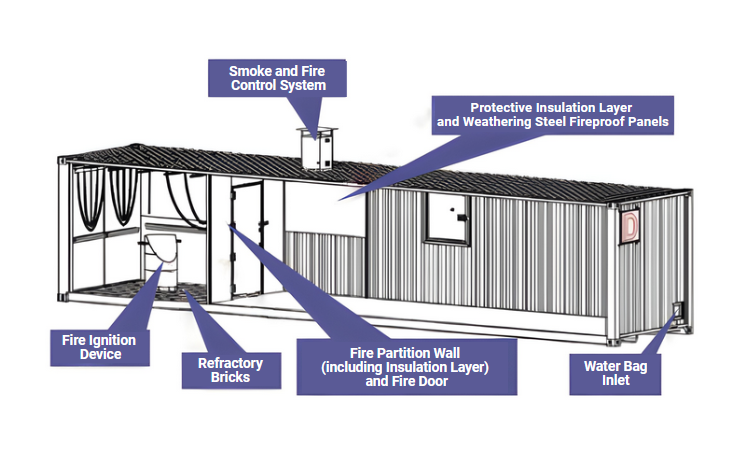
The combustion zone floor is paved with refractory fireproof bricks. Chains and shelving systems allow solid wooden fuel to be securely fixed on walls and ceilings, ensuring stable and repeatable combustion scenarios. Smoke exhaust, fire control devices, and fire shields are installed in the ceiling and operated from the training zone. Fire hose inlets are installed on the exterior walls to support operational training.
The flashover training container is divided into a combustion zone and a training zone, separated by fireproof partitions and fire doors. At the interface between zones, ceilings and side walls are equipped with insulation layers and weather-resistant steel fireproof panels.
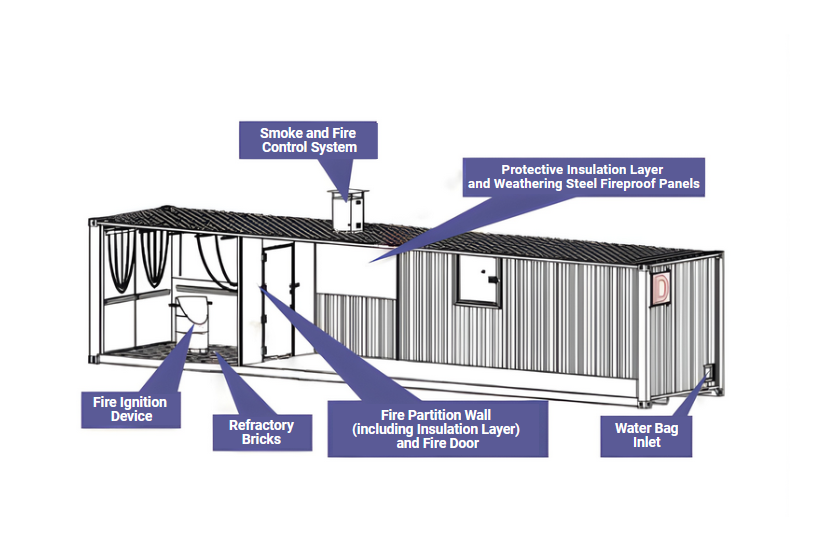
The combustion zone floor is paved with refractory fireproof bricks. Chains and shelving systems allow solid wooden fuel to be securely fixed on walls and ceilings, ensuring stable and repeatable combustion scenarios. Smoke exhaust, fire control devices, and fire shields are installed in the ceiling and operated from the training zone. Fire hose inlets are installed on the exterior walls to support operational training.
The flashover training container is divided into a combustion zone and a training zone, separated by fireproof partitions and fire doors. At the interface between zones, ceilings and side walls are equipped with insulation layers and weather-resistant steel fireproof panels.
Backdraft Training System
The backdraft training system allows firefighters to safely observe and understand backdraft conditions from controlled positions.
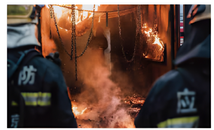
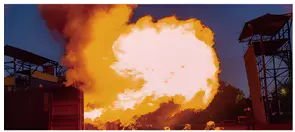
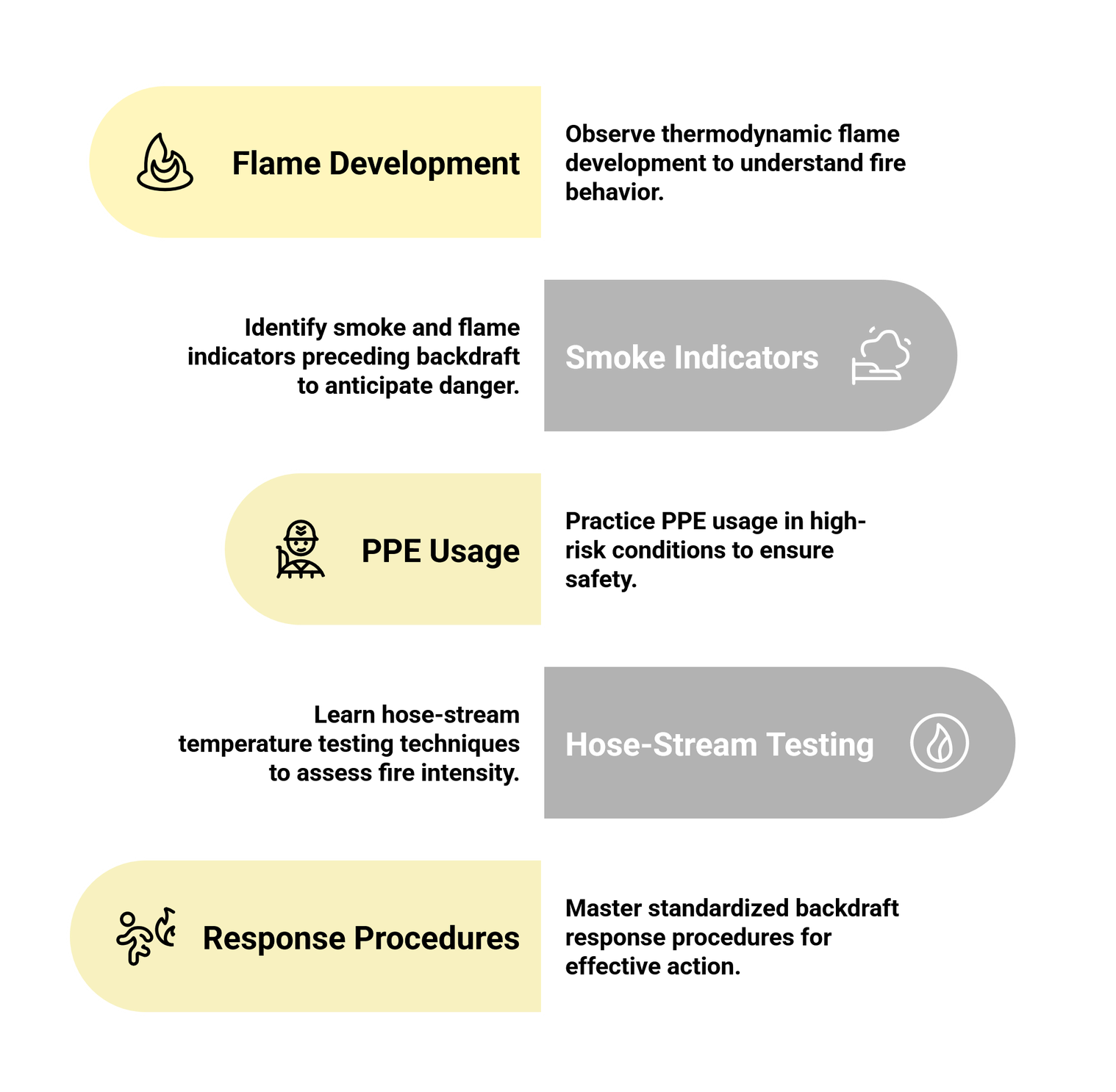
The system is designed to withstand extreme temperatures. Integrated smoke recovery and water treatment systems minimize environmental impact.
Backdraft Training System
The backdraft training system allows firefighters to safely observe
and understand backdraft conditions from controlled positions.
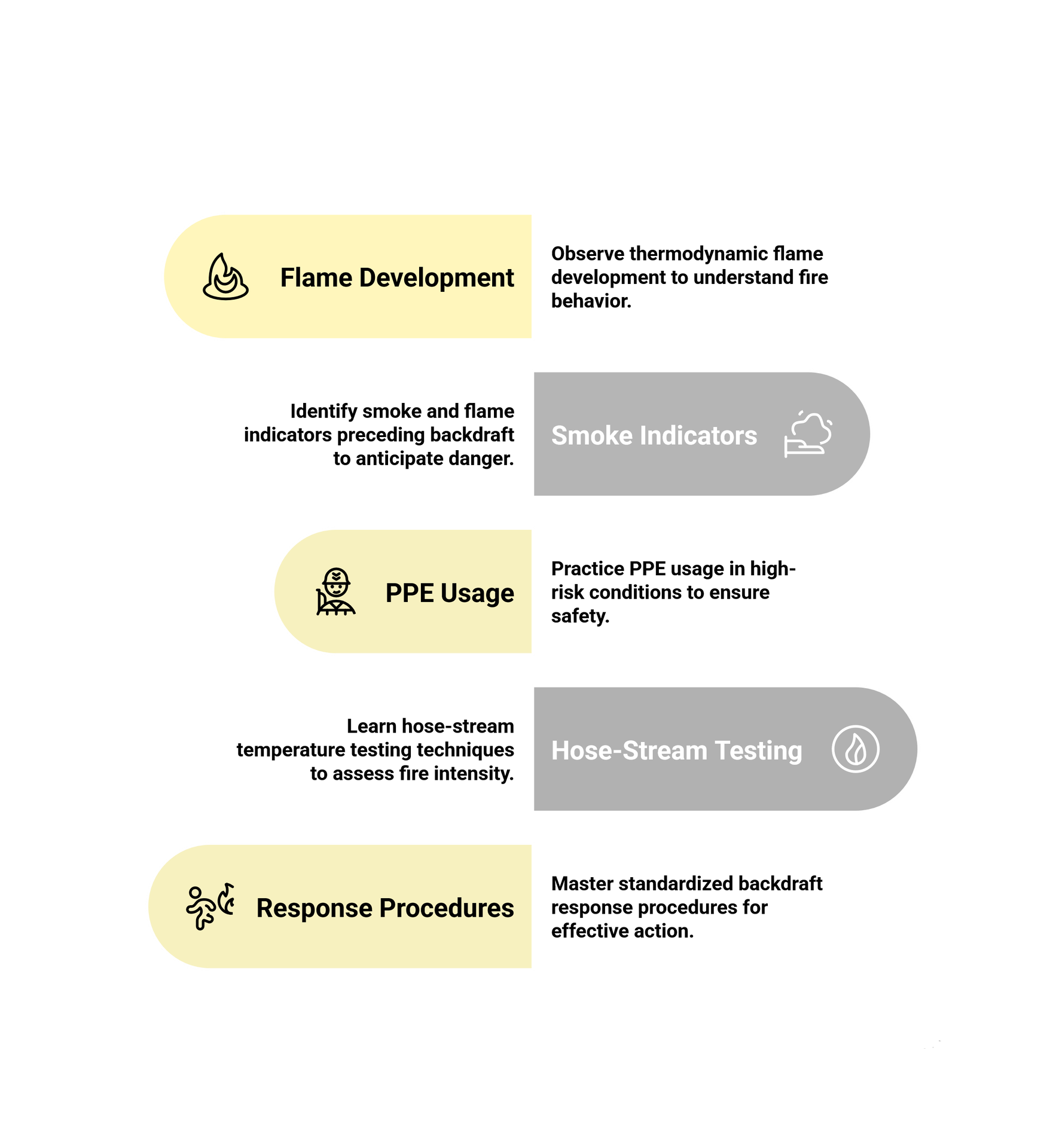
The system is designed to withstand extreme temperatures.
Integrated smoke recovery and water treatment systems minimize environmental impact.
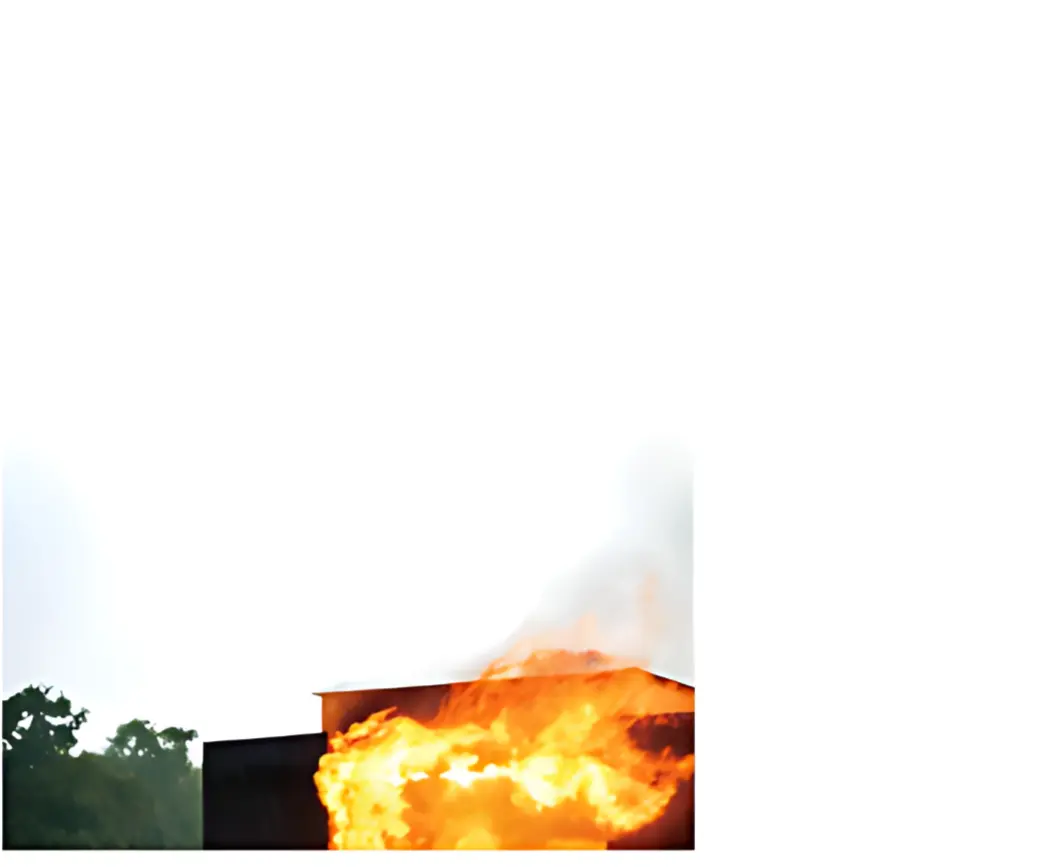
This live-fire smoke and heat simulation training facility has been independently developed to improve firefighter safety and operational readiness. It prepares fire officers and rescue personnel for unpredictable, high-risk situations encountered during real firefighting operations.
The system simulates combustion phenomena, emergency evacuation, confined space navigation, and interior fireground operations. It enhances emergency response capability, situational awareness, and self-rescue skills while reducing injury risk.
The facility integrates active and passive safety protection, one-click system startup, and a fully intelligent IoT control platform to ensure safe, reliable, and repeatable training.
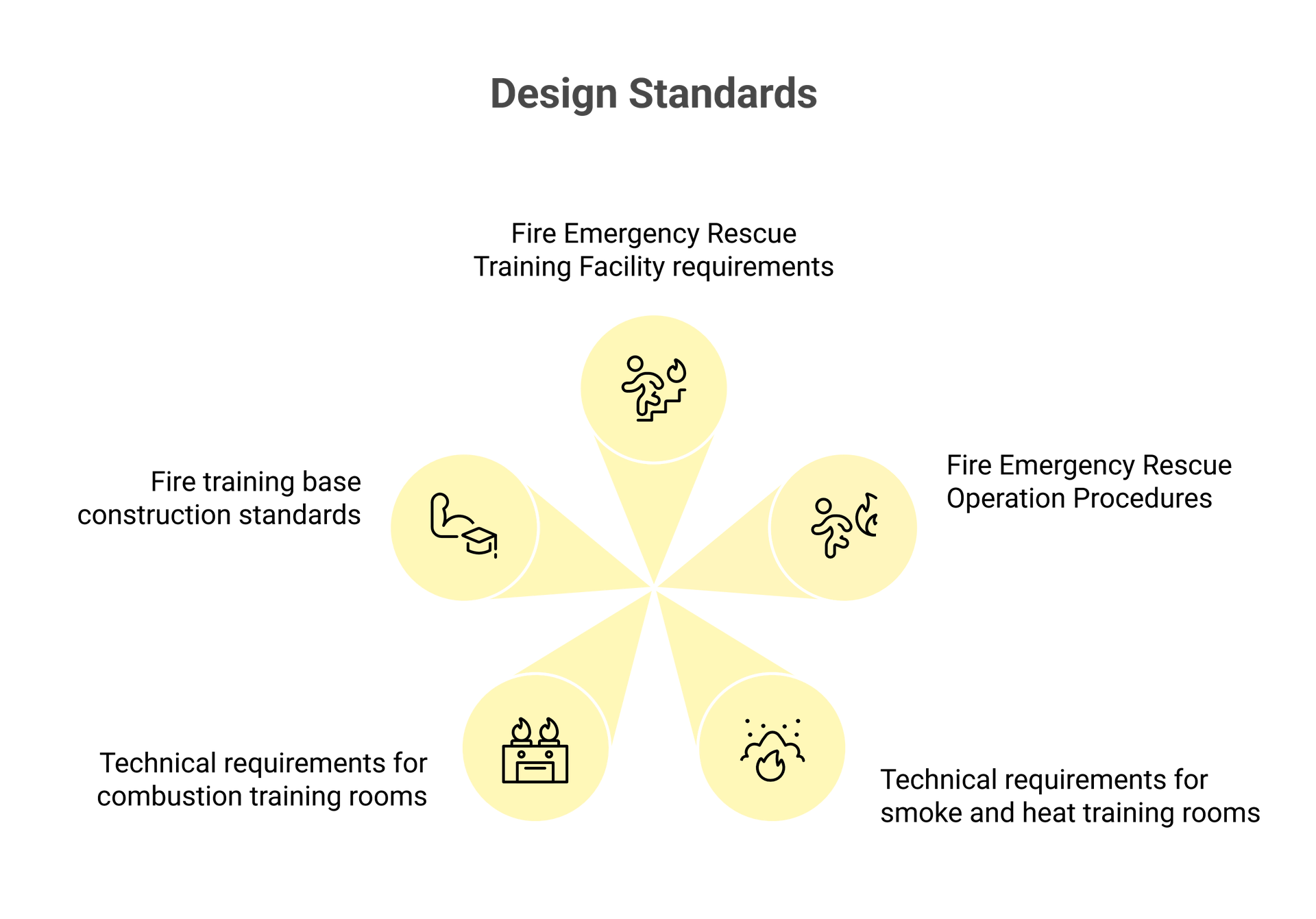
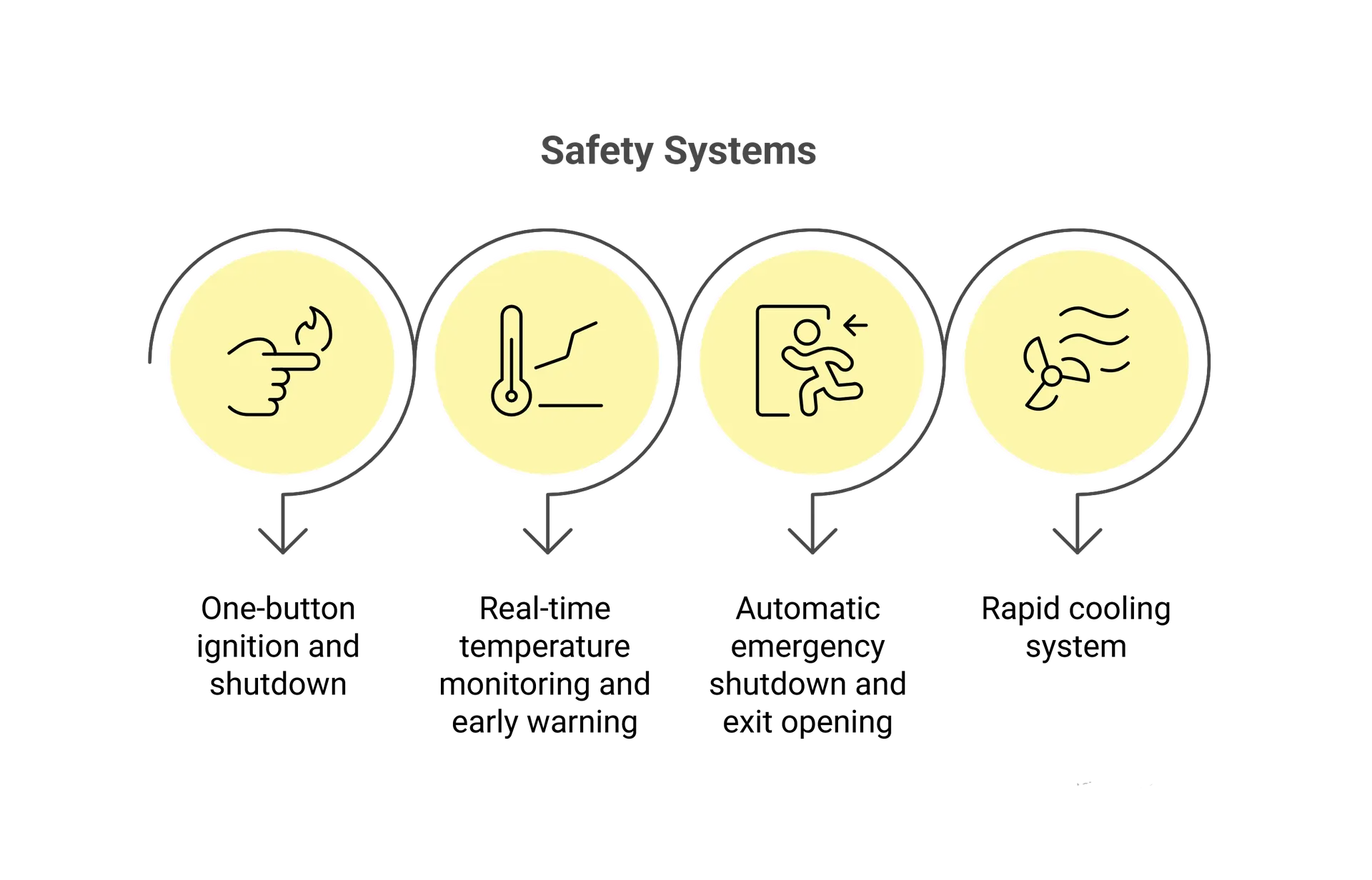
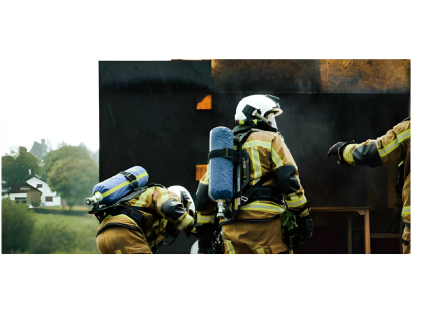
Temperature alarms activate at:
- 200°C at 1.2 meters
-
600°C at 2.2 meters
Live-Fire Smoke and Heat Comprehensive Simulation Training Facility
Product Introduction
This live-fire smoke and heat simulation training facility has been independently developed to improve firefighter safety and operational readiness. It prepares fire officers and rescue personnel for unpredictable, high-risk situations encountered during real firefighting operations.
The system simulates combustion phenomena, emergency evacuation, confined space navigation, and interior fireground operations. It enhances emergency response capability, situational awareness, and self-rescue skills while reducing injury risk.
The facility integrates active and passive safety protection, one-click system startup, and a fully intelligent IoT control platform to ensure safe, reliable, and repeatable training.
Temperature alarms activate at:
- 200°C at 1.2 meters
-
600°C at 2.2 meters
Live-Fire Smoke and Heat Comprehensive Simulation Training Facility
Product Introduction
Forcible Entry Techniques Training Chamber
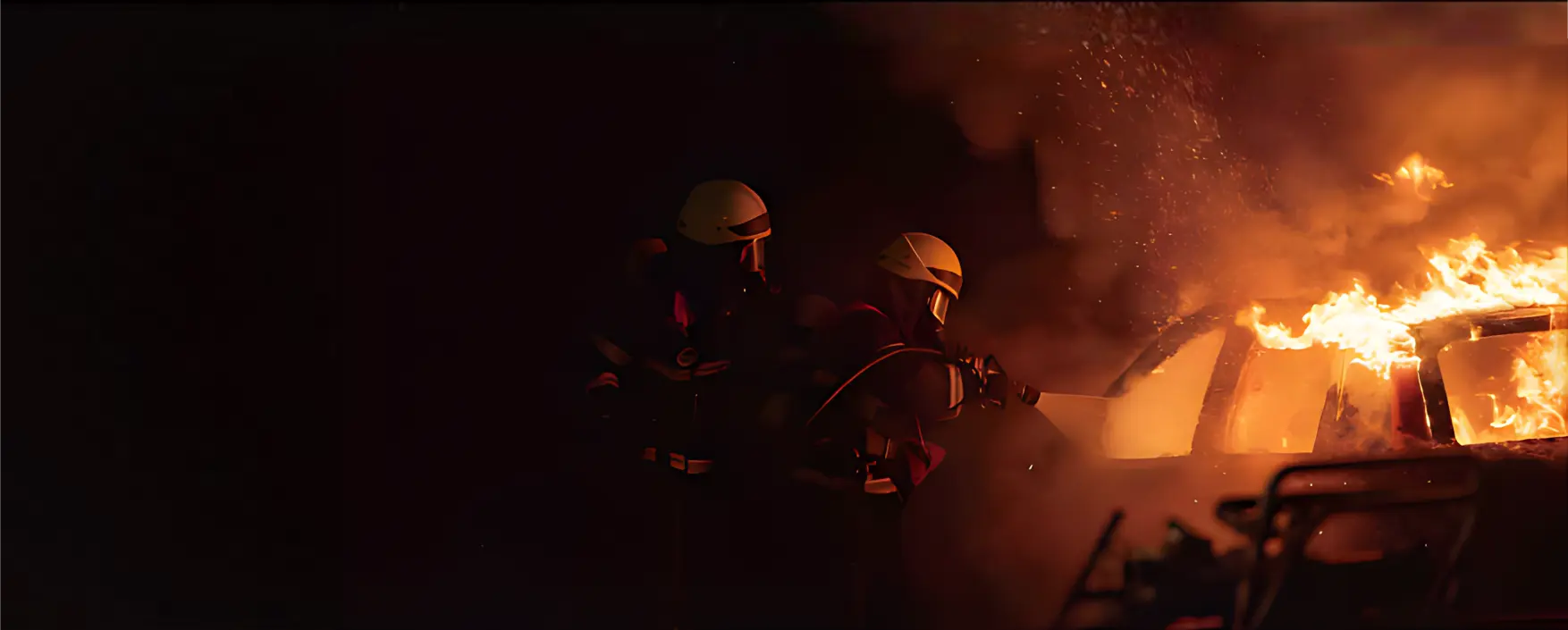
Provides near-real combat training using realistic structural obstacles, extreme environmental conditions, and intelligent safety controls. Modular, reusable, and heat-resistant construction ensures long-term use.
Forcible Entry Techniques Training Chamber
Provides near-real combat training using realistic structural obstacles, extreme environmental conditions, and intelligent safety controls. Modular, reusable, and heat-resistant construction ensures long-term use.