Wielomodułowa konstrukcja szkoleniowa CFBT
Kontenerowe rozwiązanie szkoleniowe
Wielomodułowa konstrukcja szkoleniowa CFBT
Kontenerowe rozwiązanie szkoleniowe
Charakterystyka obiektu
-
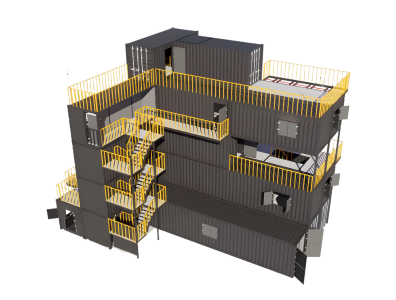
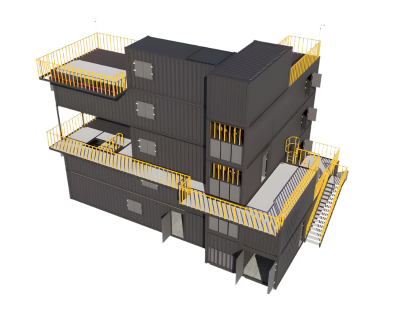
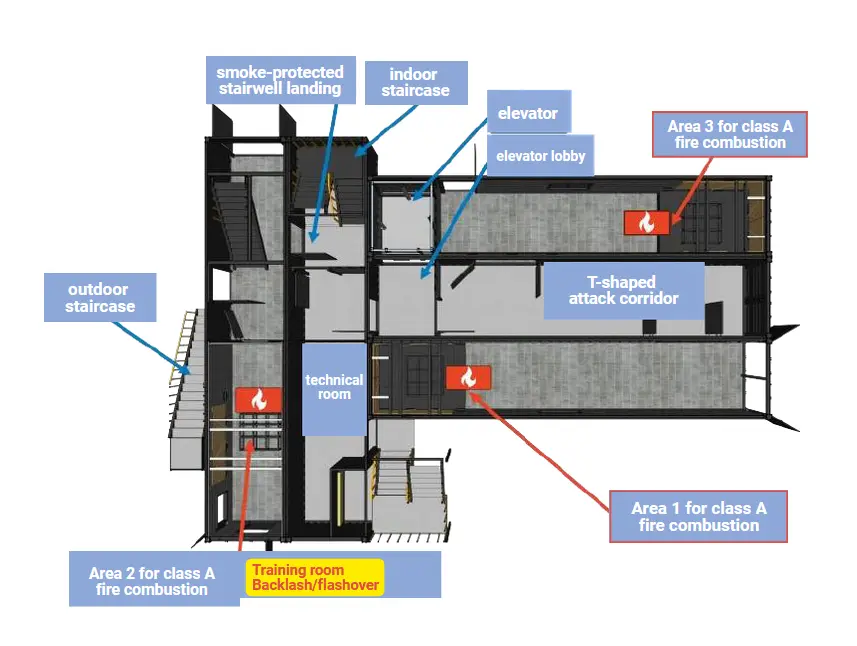
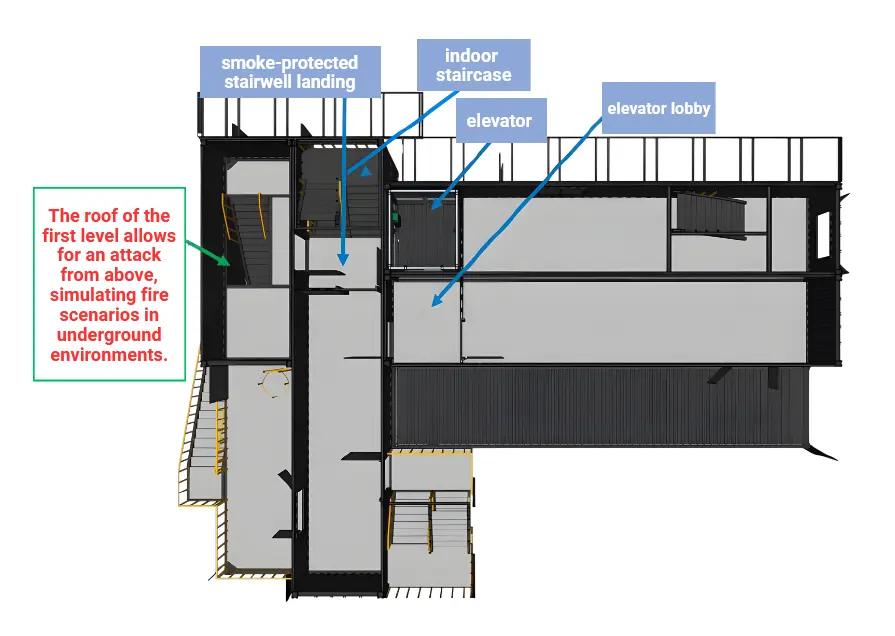
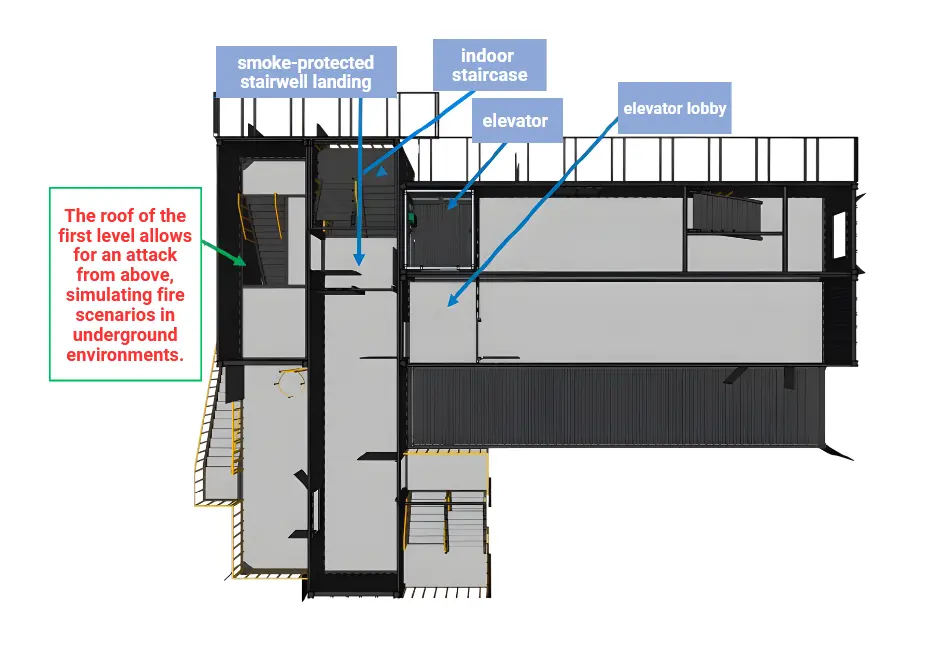
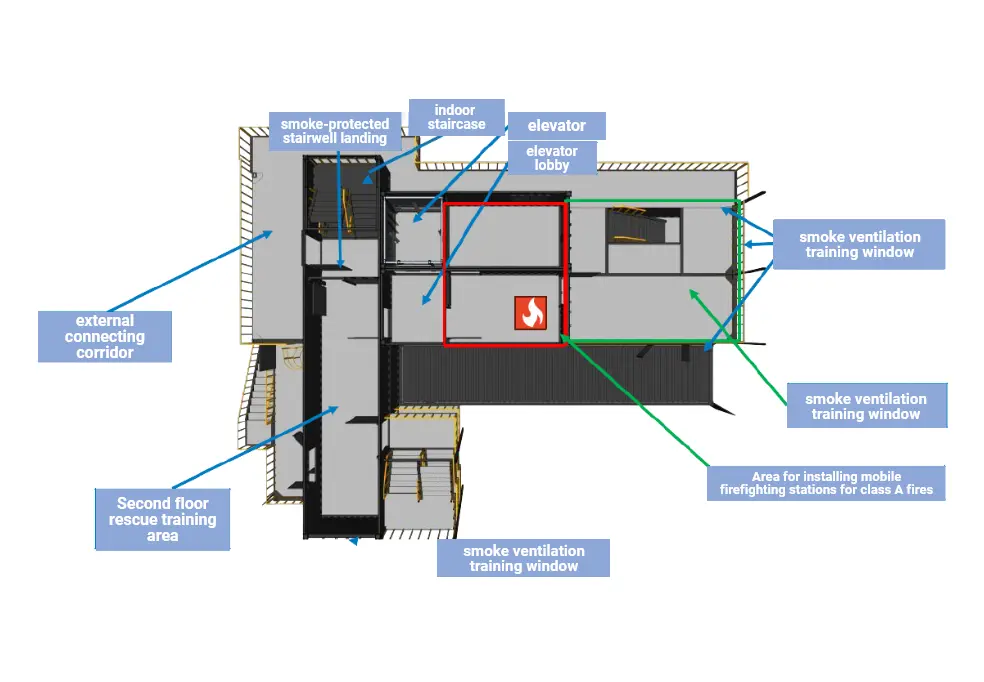
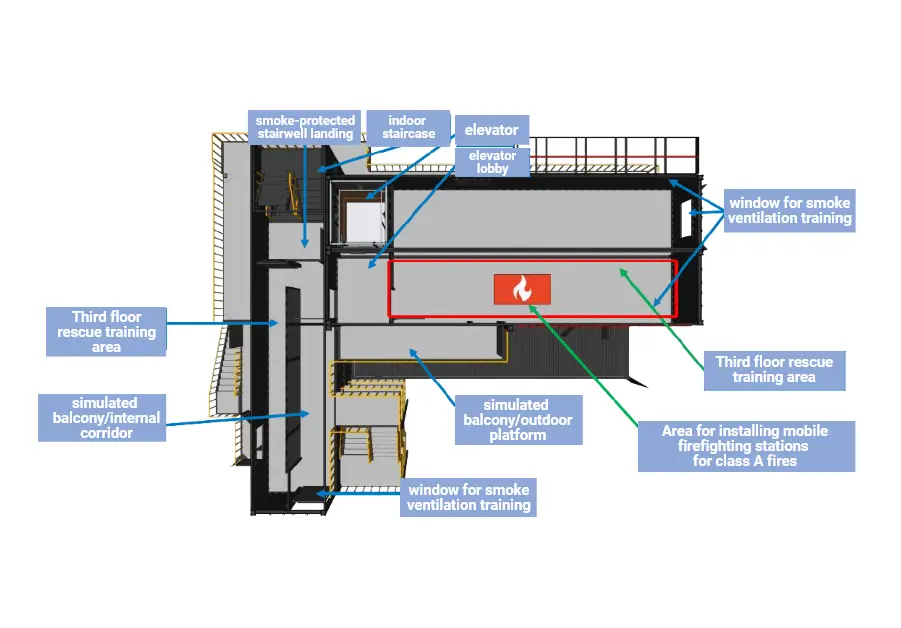
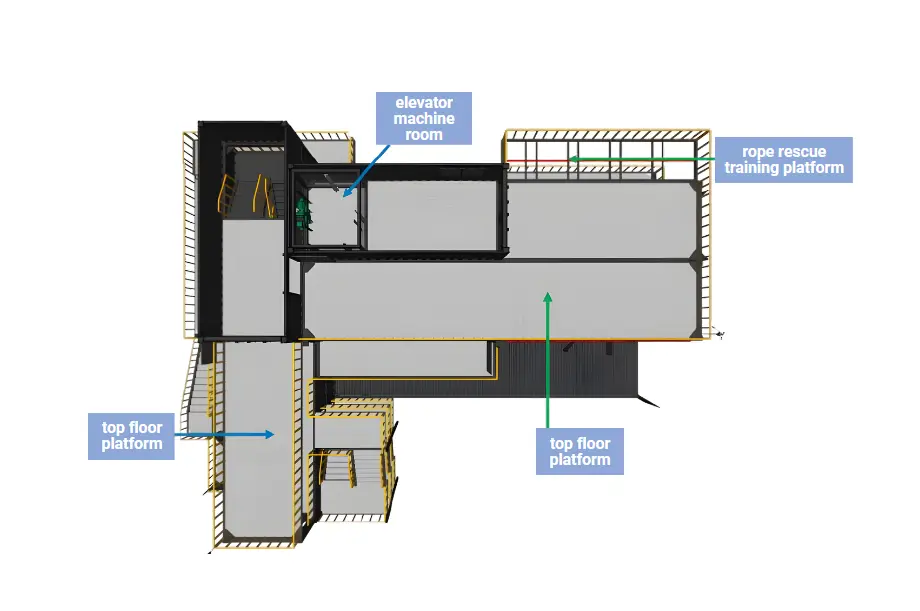
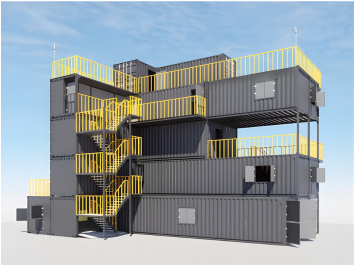
Obiekt ten został zaprojektowany i przeznaczony na centrum szkoleniowe przez IFIW (Międzynarodową Organizację Instruktorów Pożarnictwa). Ogólny projekt jest zgodny z normami europejskimi. Konstrukcja składa się z pięciu poziomów i obejmuje 21 kontenerów o różnych rozmiarach.
-
CFBT (Compartment Fire Behavior Training) to szkolenie obejmujące analizę rozwoju pożaru w przestrzeniach zamkniętych, techniki podawania prądów gaśniczych, taktykę wentylacji i kontroli zadymienia oraz kluczowe zagadnienia operacyjne związane z działaniami ratowniczo-gaśniczymi.
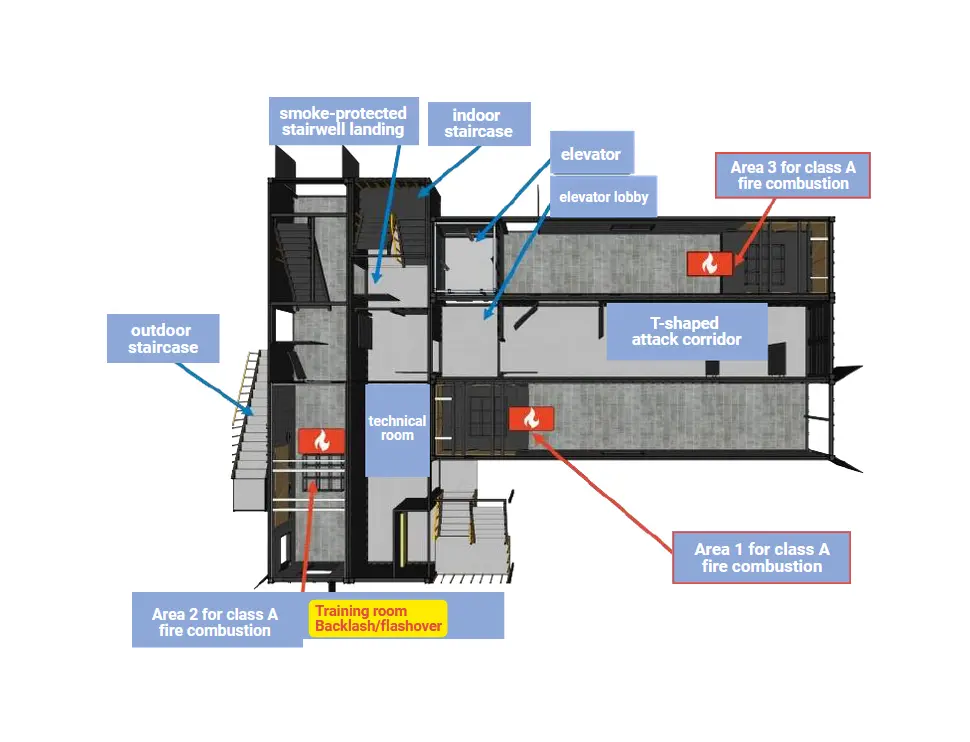
- W przeciwieństwie do tradycyjnych trenażerów gazowych, ta kontenerowa konstrukcja szkoleniowa wykorzystuje drewno jako paliwo, czyli system pożaru klasy A (w układzie dwupaleniskowym). Pozwala to na symulację realistycznych scenariuszy pożarów klasy A, charakteryzujących się chaotycznym przebiegiem, gęstym zadymieniem oraz złożonymi warunkami środowiskowymi, zwiększając poziom realizmu i umożliwiając prowadzenie zaawansowanego szkolenia w zakresie rzeczywistego zachowania się pożaru.