跳至内容

Multi-module CFBT Training Structure

Container-Based Training System Solution

Multi-module CFBT Training Structure
基于集装箱的训练系统解决方案

Overview of the Facility


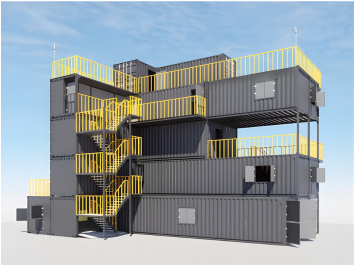
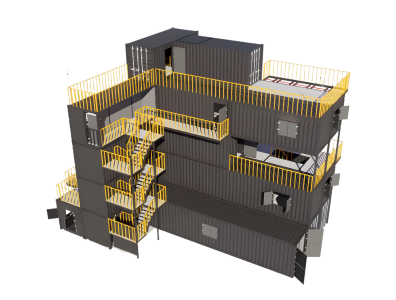
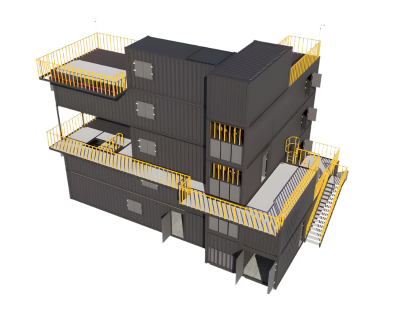
  • This facility has been designed and designated as a training center by the IFIW (International Fire Instructors Organization). The overall design is aligned with European standards. The structure consists of five levels and includes 21 containers of various sizes.

  • CFBT (Compartment Fire Behavior Training) refers to training on fire and smoke behavior in indoor environments, firefighter hose stream application, ventilation and smoke extraction, and other fundamental aspects of firefighting operations.

  • Unlike traditional gas-fired training props, this container-based training structure uses wood as fuel, i.e., a dual Class A fire system. This allows the simulation of realistic Class A fire scenarios characterized by chaos, dense smoke, and complex environmental conditions, thereby increasing realism and enabling advanced training on real fire behavior.
​设施概览

  • 该设施由 国际消防教官组织(IFIW) 设计并指定为培训中心。整体设计符合欧洲标准,结构共五层,包含 21 个不同尺寸的集装箱。
  • CFBT(舱室火灾行为训练)指的是针对室内火灾和烟雾行为的训练,包括消防员水枪操作,通风与排烟,以及消防行动的其他基本技能训练。
  • 与传统燃气训练道具不同,这种基于集装箱的训练结构使用木材作为燃料,即双重 A 类火系统。它能够模拟现实中的 A 类火灾场景,具有混乱、浓烟和复杂环境等特征,从而增强训练的真实感,并支持对真实火灾行为的高级训练。

顶部全景视图

(Visual overview of the container structure from above)

顶部全景视图

(从上方俯瞰集装箱结构的视觉概览)


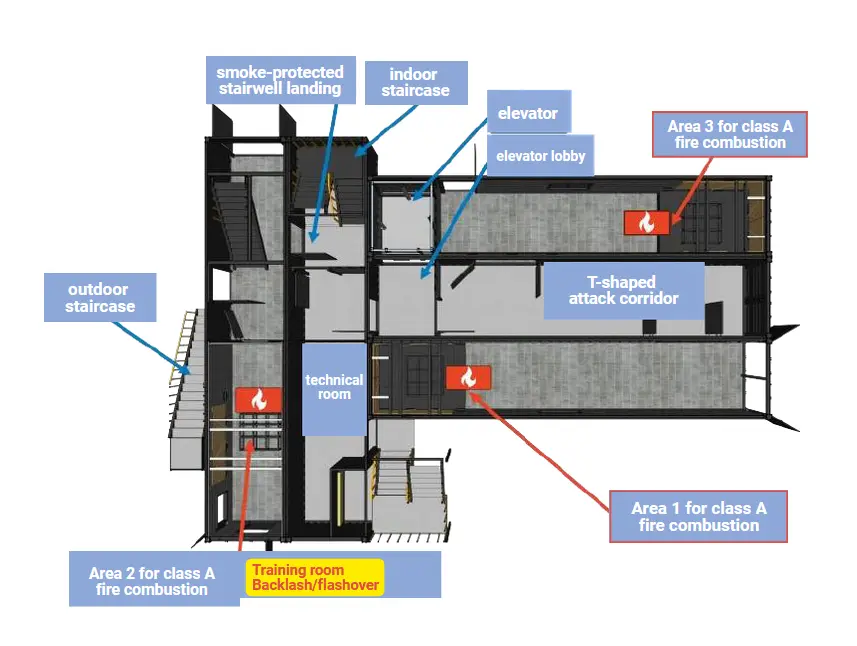
Ground Floor Plan

Based on the international standard layout of CFBT training facilities.


By using Class A fire combustion chambers on both sides, the structure is divided into two training areas connected through typical building structures.

Key Areas:

  1. Class A fire containers 1, 2, and 3
  2. T-shaped attack corridor
  3. Backdraft / Flashover training room
  4. Staircases, elevator shaft, elevator anteroom, smoke-protected stair anteroom

The three training areas are interconnected by doors along the corridors, allowing combined training exercises or the creation of separate training courses.

底层平面图

根据 CFBT 训练设施的国际标准布局。

通过在两侧使用 A 类火灾燃烧室, 该结构被划分为两个通过典型建筑结构连接的训练区域。

关键区域:

  1. A类火灾储存容器1、2和3
  2. T形进攻走廊
  3. 回燃 / 轰燃训练室
  4. 楼梯间、电梯井、电梯前室、防烟楼梯间前室

三个训练区域通过走廊上的门相互连通,可开展联合训练,也可分隔成独立训练路线。


首层平面图

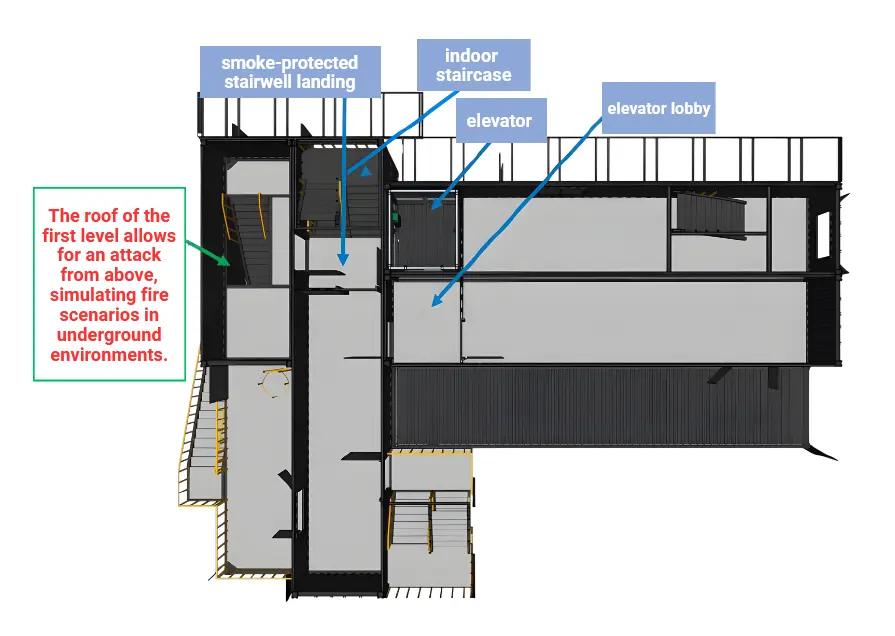
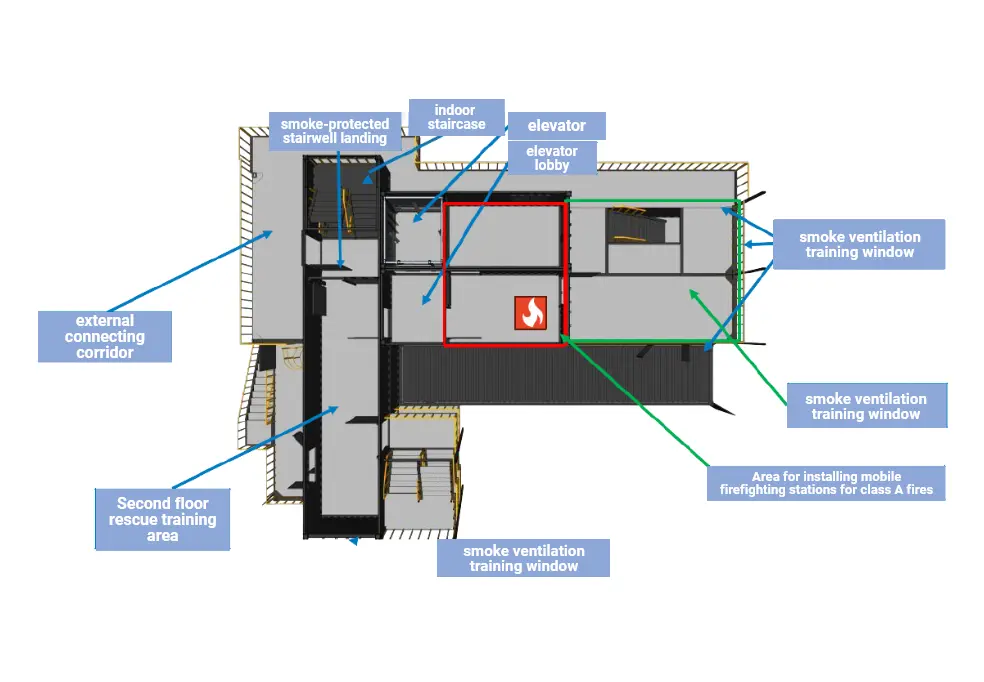
The roof of the first level allows for top-down fire attack, simulating underground fire scenarios.

The second-level layout is dedicated to search and rescue training in a maze-like environment. Main training activities include:

  1. Rescue operations in smoke-filled environments
  2. Ventilation and smoke extraction training
  3. Underground fire scenarios
  4. Use of the fire service elevator

Smoke generated by the first-level combustion chambers is directed into the second-level training rooms through natural smoke movement or via the smoke evacuation system.

Inside the compartments, movable grid floor structures are installed. These can be flexibly combined to adjust the difficulty level of rescue operations and adapt training to firefighters with different experience levels.

首层平面图

首层屋面可进行自上而下的灭火作业,模拟地下火灾场景。

二层布局用于迷宫式环境下的搜救训练。主要训练内容包括:

  1. 烟雾环境下的救援行动
  2. 通风与排烟训练
  3. 地下火灾场景
  4. 消防电梯使用训练

由一级燃烧室产生的烟雾,通过自然烟气流动或烟雾排放系统,导入二级训练室。

在舱室内,安装了可移动的格栅地板结构。这些结构可以灵活组合,以调整救援操作的难度,并使训练适应不同经验水平的消防员。


Second Floor Plan ​

二层平面图


Third Floor Plan ​

三层平面图


Fourth Floor Plan ​

四层平面图